

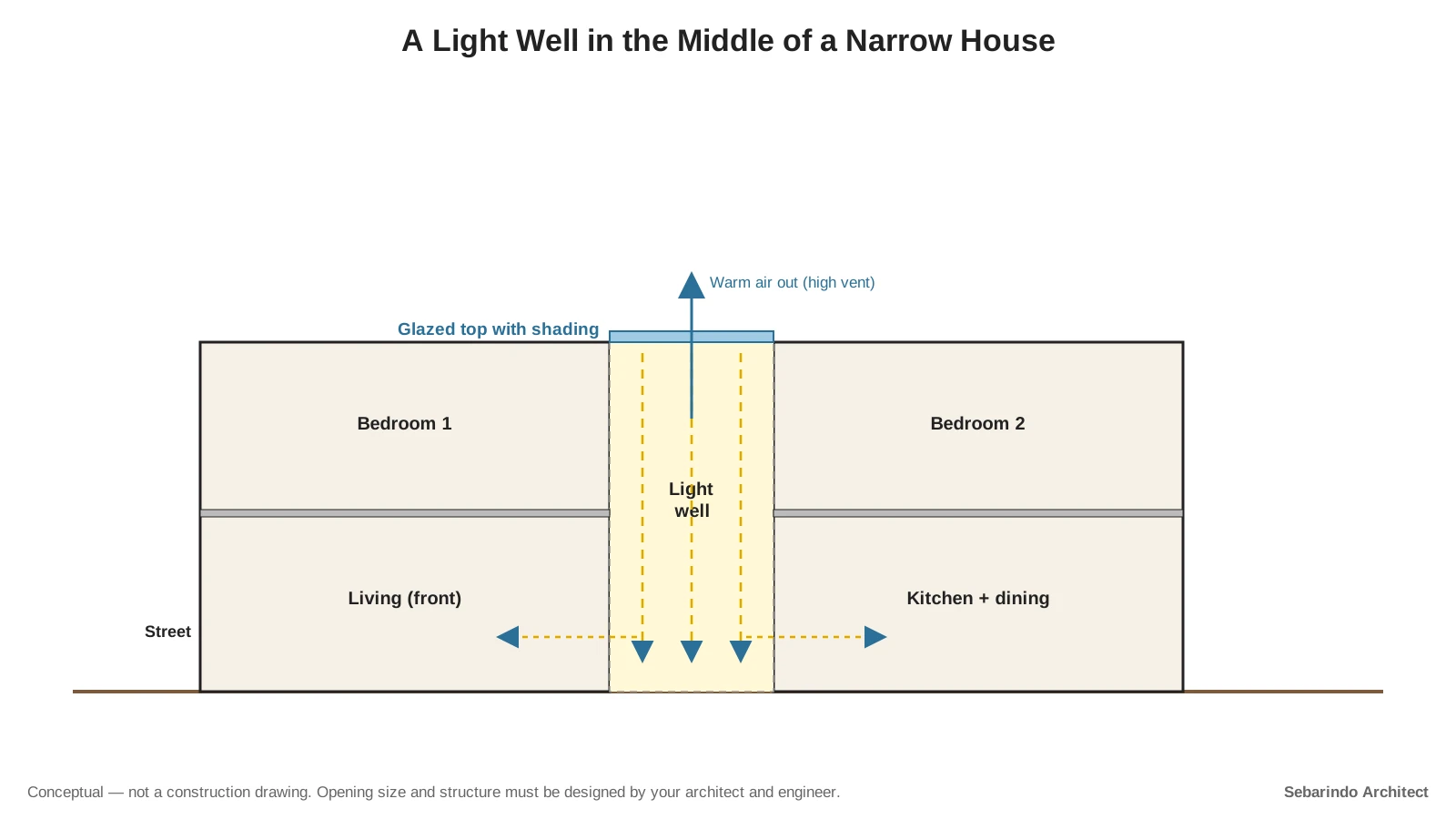
Sebarindo Architect – A common mistake in narrow houses is to fill the whole lot and leave the middle rooms dark all day. A light well or skylight can bring daylight back, but only if it is sized and shaded with care.
This guide is for owners of mid-row and narrow houses in Indonesia, where side walls are shared and windows can only face front or back. It explains the options and the trade-offs; your architect will size the final openings.
What the Rules Ask For
Indonesia’s 2002 healthy-house guideline asks for window openings of at least one-tenth of a room’s floor area. It also asks for at least one hour of direct sunlight a day and natural light of at least 50 lux in bedrooms.
A room with no outside wall cannot meet that through windows alone. That is where light from above comes in.
The national standard for daylight design, SNI 03-2396-2001, measures daylight with a “sky factor” and assumes an overcast sky giving 10,000 lux outdoors. In plain terms, it plans for a cloudy day, not a sunny one.
Light Well or Skylight
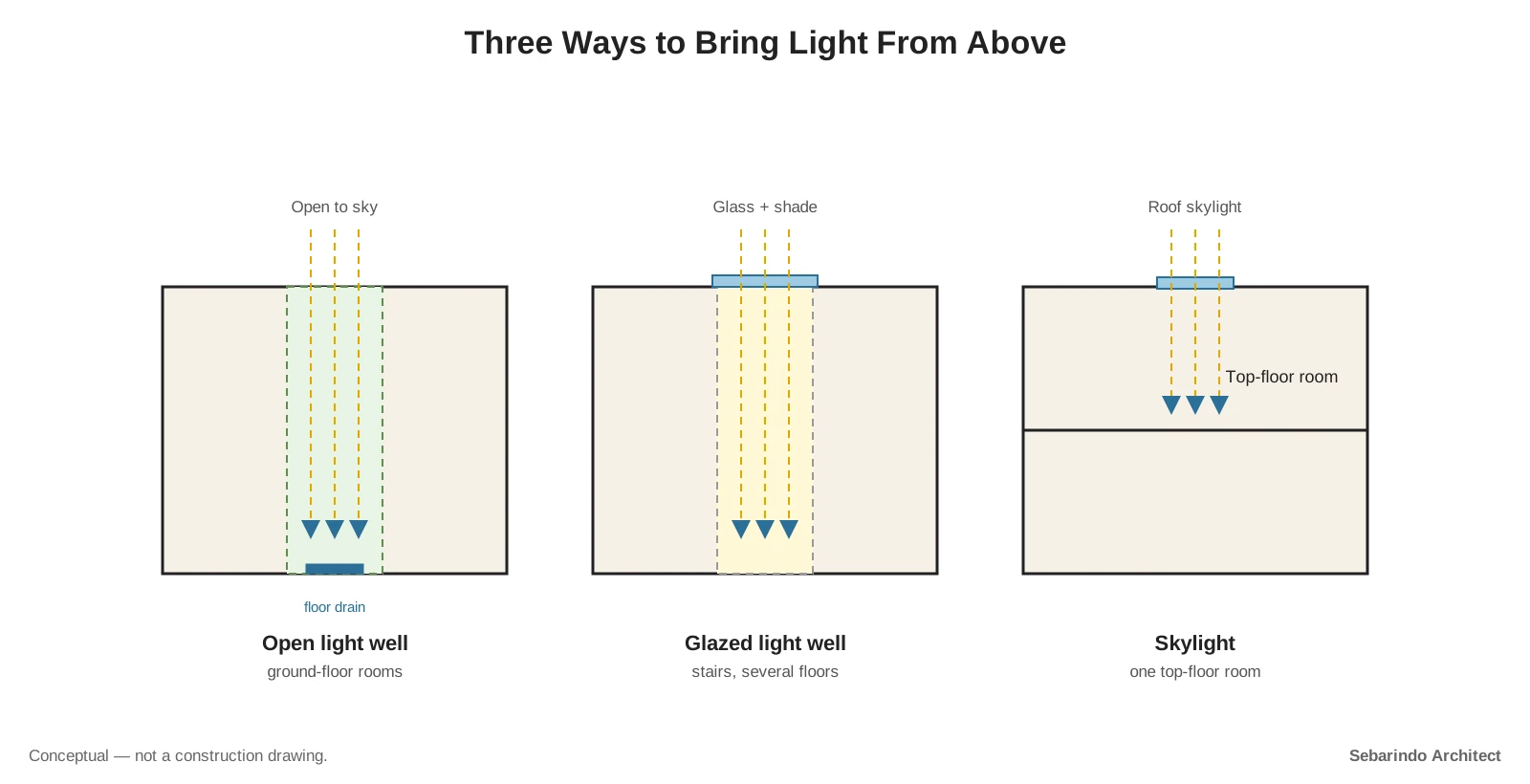
A light well is an open or glazed shaft that runs down through the house from the roof. A skylight is a glazed opening in the roof itself, directly over a room.
| Option | How it works | Best for | Watch out for |
|---|---|---|---|
| Open light well | A small courtyard open to the sky | Ground-floor rooms in the middle of the house | Rain getting in; needs a drain |
| Glazed light well | A shaft with glass or polycarbonate on top | Stair halls and corridors on several floors | Heat under the glazing |
| Skylight | A glazed panel in the roof over one room | Top-floor rooms and bathrooms | Glare and heat in the afternoon |
A light well also helps air move. Warm air rises up the shaft and leaves through high vents, pulling fresher air in from below.
What Research Says About Size and Shape
A 2021 simulation study at Parahyangan Catholic University tested skylights and light wells under overcast skies. The shape of the skylight, dome, pyramid or flat, made no difference to how much daylight reached the room.
What mattered was size and depth. A smaller skylight gave less daylight, and a taller light well also reduced daylight reaching the floor.
The pyramid shape gave the most glare in that study. A translucent panel at the base of the light well lowered glare and spread light more evenly, at the cost of some brightness.
Say your light well must pass through two floors. Expect the ground floor to get noticeably less light than the top floor, and plan pale wall finishes inside the shaft to bounce more of it down.
Keep the Heat Out
Glass on a roof faces the sun most of the day. Without shading, a skylight can make the room below hotter, which undoes much of the benefit.
Use frosted or tinted glazing, a shading screen above it, or a vent at the top of the light well. On a skylight over a bedroom, a fabric or louver screen underneath lets you control glare.
Keep the Rain Out
An open light well needs a floor drain sized for heavy tropical rain, and a small step or upstand so water does not run into rooms. Glazed skylights need careful flashing where the frame meets the roof.
Most leaks appear at that junction, not in the glass itself. Ask for the flashing detail before work starts.
Permits and Structural Checks
Cutting a new opening in a roof or floor slab is an alteration to a building, which falls under the PBG (Persetujuan Bangunan Gedung) approval in Government Regulation 16/2021. Check with your local building office before you start.
Ask a licensed engineer before cutting through any slab or roof frame. A light well removes structure that may be carrying load, so the opening often needs new beams around it.
Daylight changes through the year. Check a room again in the rainy season, when skies are darker, before deciding the opening is big enough.
This article is general information, not a structural, electrical or legal assessment of your building. Structural work, wiring and permit decisions should be checked by a licensed architect or engineer and your local building office.
Komentar Ditutup! Anda tidak dapat mengirimkan komentar pada artikel ini.