

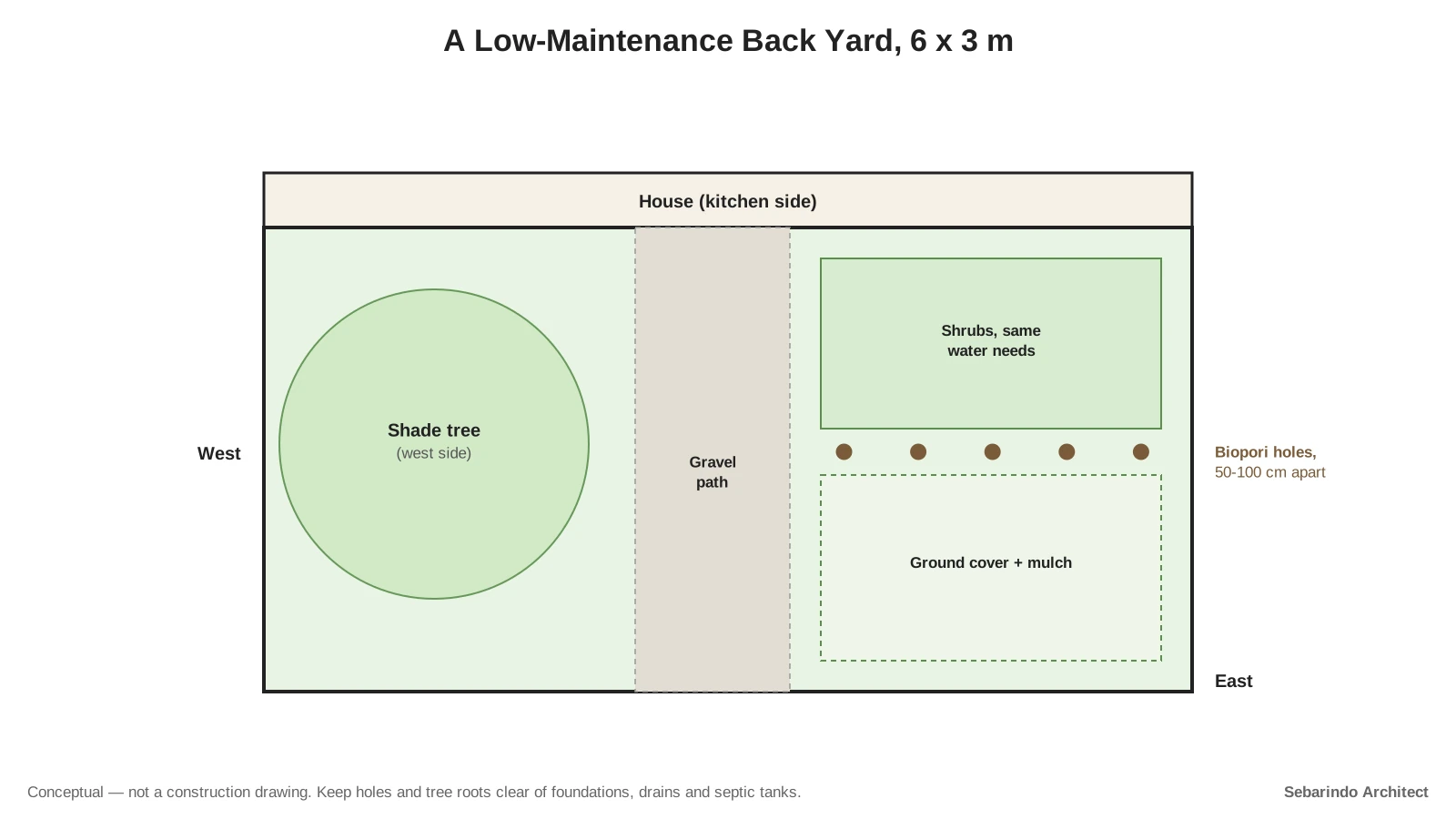
Sebarindo Architect – Say your yard is a 2 m strip behind the kitchen, and every weekend it turns into weeding, sweeping and puddles. A low-maintenance tropical garden flips that: fewer, tougher plants, one well-placed tree, and soil that swallows the rain.
This guide is for owners of small yards in lowland Indonesia. Plant examples come from a university survey of house gardens; check local nurseries for what grows well near you.
Why a Small Garden Is Worth Keeping
Local plans can require a minimum KDH (Koefisien Daerah Hijau), the share of a lot kept as green open space, under Government Regulation 16/2021. Paving the whole yard can put a house out of line with that.
Green space also cools. A study on the IPB campus in Bogor measured afternoon air temperatures about 2.3 to 3.1°C lower inside green areas than at nearby spots without plants.
A small yard will not match a campus grove. But shade on a west wall or a paved area still takes heat off the house.
Choose Plants That Handle Lowland Heat
A Gadjah Mada University study surveyed house gardens in a lowland housing area with an average temperature of about 25.9°C and humidity of 77.8%. It recorded which plants residents grew there.
| Type | Examples recorded in lowland gardens |
|---|---|
| Small trees and palms | Palem merah (Cyrtostachys lakka), palem botol (bottle palm) |
| Shrubs | Soka (Ixora coccinea), adenium, Euphorbia milii |
| Ground cover | Spider lily (Hymenocallis speciosa) |
| Lawn and slopes | Rumput paetan (Axonopus compressus), noted for erosion control |
The study found that most plants in those gardens needed strong light but not intensive watering. That combination is a good start for a low-effort yard.
One Tree, Placed Well
Mango was the most dominant tree in the surveyed gardens, and most residents said they preferred fruit trees. A broad crown also shades walls and windows.
Place a tree where its shade lands on the hot side of the house, usually west. Ask the nursery how wide its roots and crown will grow, and keep it clear of drains, septic tanks and foundations.
Say you only have room for one tree. A small fruit tree on the west side gives shade, privacy and something to eat.
Let Rain Soak In
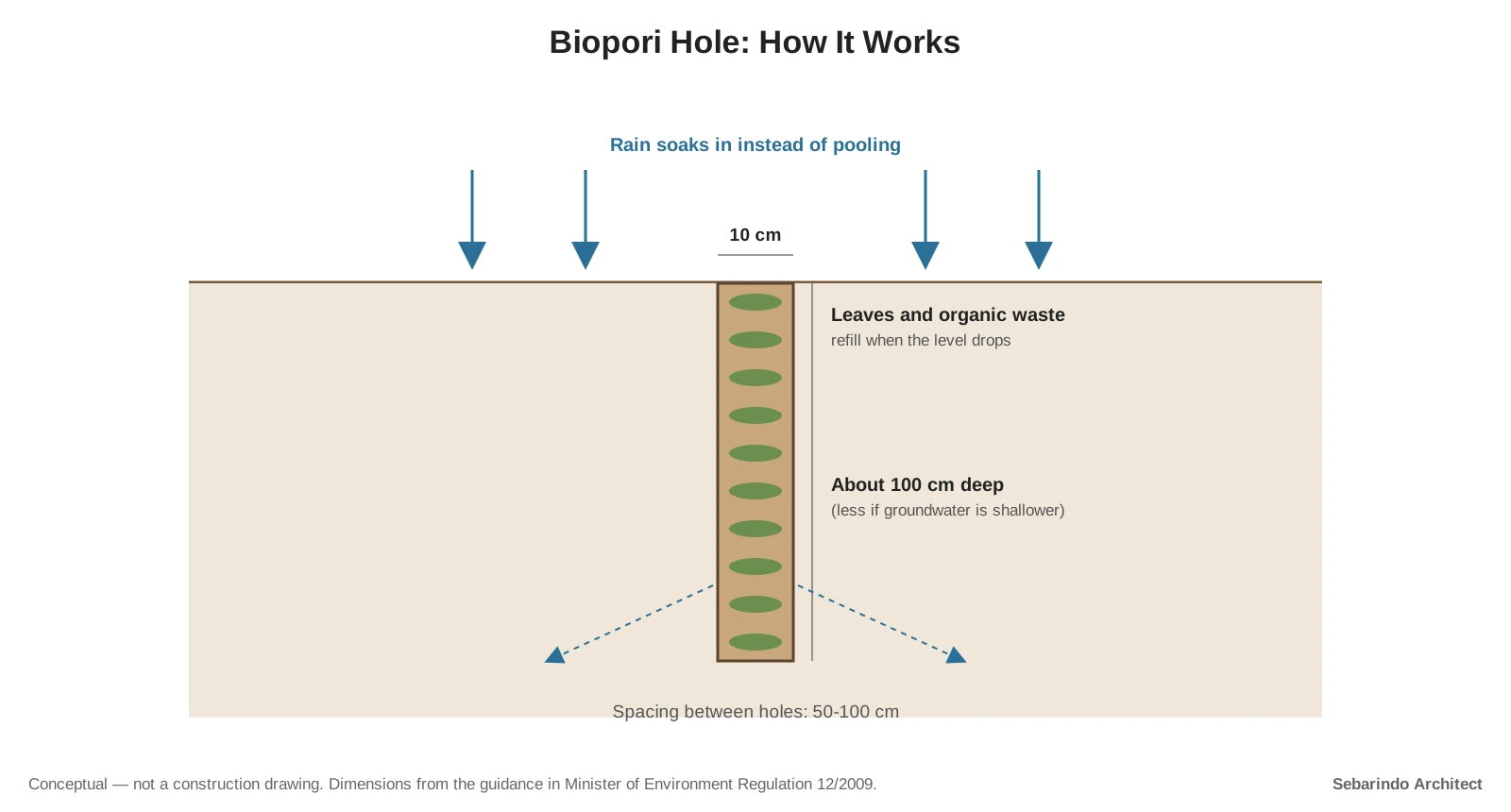
Indonesia’s Minister of Environment Regulation 12/2009 requires every party responsible for a building to make use of rainwater. It lists collection ponds, soak-away wells and biopori holes as the methods.
A biopori hole is a vertical hole in the soil, filled with leaves and other organic waste. The regulation’s guidance gives a diameter of 10 cm, a depth of about 100 cm or less if groundwater is shallower, and a spacing of 50 to 100 cm.
The holes turn fallen leaves into compost and help water sink in instead of pooling. The guidance suggests taking out the composted material after about two to three months. The requirement does not apply in karst, swamp and peat areas.
Cut the Weekly Work
Group plants with similar water needs, so you never water one bed for the sake of a single thirsty plant. Cover bare soil with mulch or gravel to keep weeds and splashing mud down.
Use stepping stones or a gravel path where people walk, rather than lawn that wears thin. Keep pots to a minimum; each one is a small daily chore.
Empty saucers, blocked gutters and old containers collect rainwater. Check them after rain, because standing water breeds mosquitoes.
When to Ask a Professional
Do not dig deep holes near foundations, septic tanks, gas lines or buried cables. Mark them first, and ask a contractor if you are unsure where they run.
Retaining walls, raised beds against a house wall and changes in ground level near the building should be checked by a professional, because soil and water pressure can damage walls.
Refill your biopori holes with leaves whenever the level drops, and empty the compost every two to three months. That one habit keeps the yard fed and dry.
Komentar Ditutup! Anda tidak dapat mengirimkan komentar pada artikel ini.