

Sebarindo Architect – Indonesia’s 2002 healthy-house guideline allows a bathroom as small as 1.20 x 1.50 m. In a space that tight and that wet, ventilation and drainage decide whether the room stays fresh or grows mold within a year.
This guide covers bathrooms in private houses in Indonesia’s hot, humid lowlands. It explains layout, ventilation, waterproofing and safety in principle; plumbing and wiring details belong to licensed installers.
The Humidity Problem
Indonesia’s Ministry of Health guideline on indoor air in homes sets a comfortable humidity range of 40 to 60%, as cited in peer-reviewed studies. A bathroom after a shower is far above that, and outdoor air in the tropics is often humid too.
So the goal is not to keep a bathroom dry at all times. It is to let it dry out quickly between uses.
Mold needs moisture that stays. Any surface that is still wet hours after a shower, behind a cabinet, in a corner or under a mat, is where it starts.
Ventilate From High Up
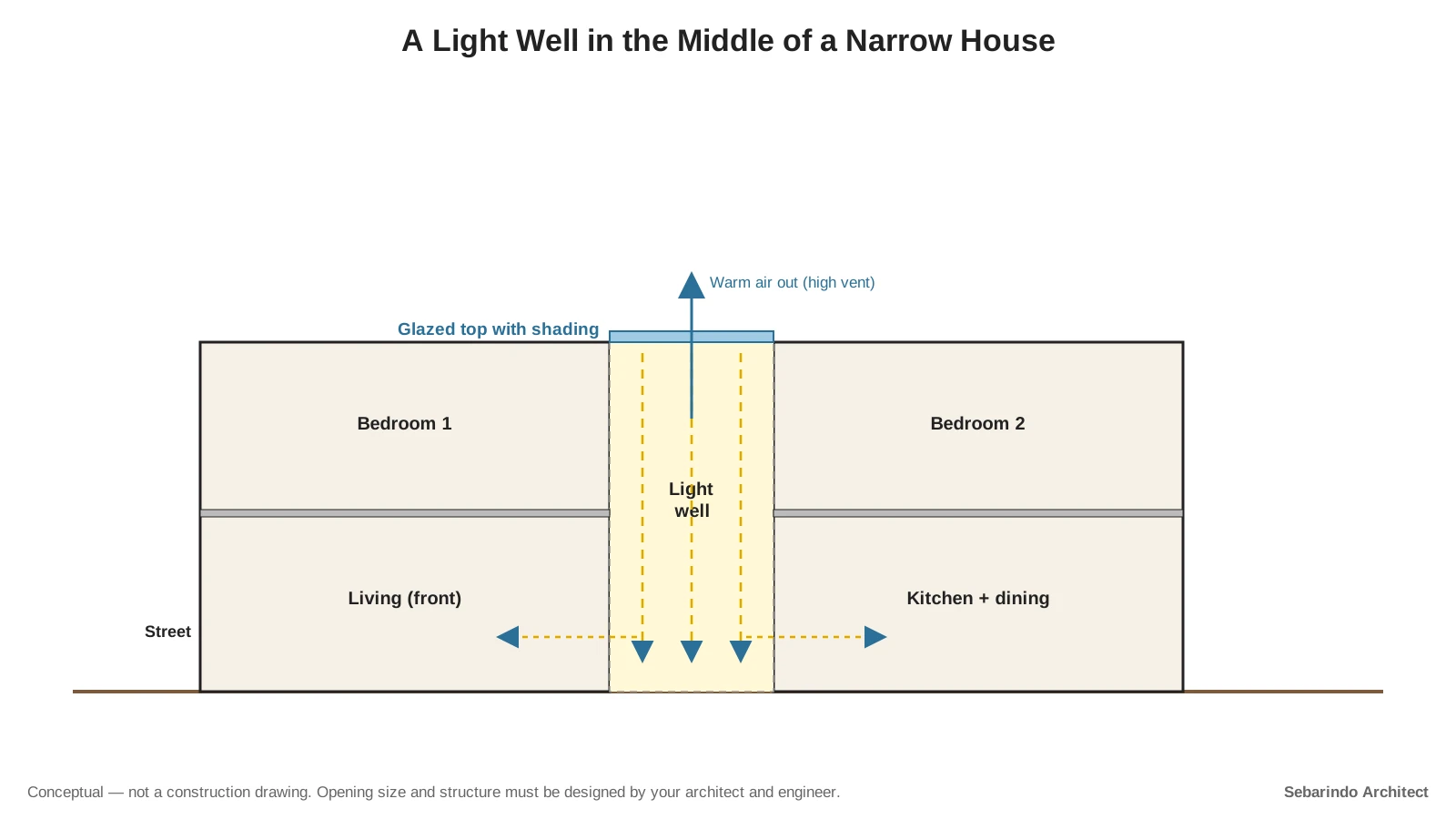
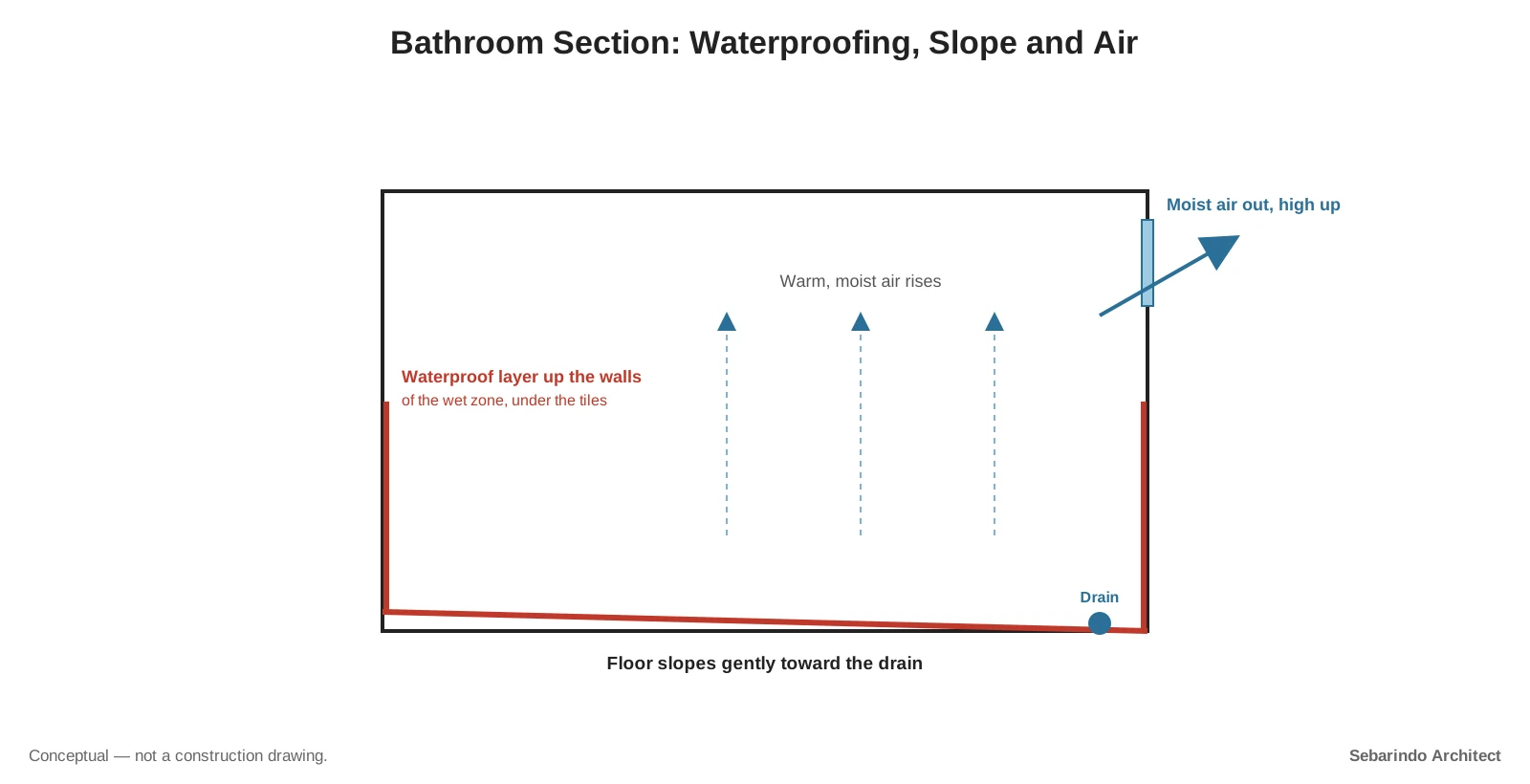
Warm, moist air rises. A vent or window placed high on the wall lets it escape instead of settling on the ceiling.
The 2002 guideline asks for ventilation openings of at least 5% of a room’s floor area and window openings of at least one-tenth. For a 1.8 m² bathroom, that is only about 0.09 m² of vent, a small opening (our estimate).
That minimum is easy to meet and not always enough. If the bathroom has no outside wall, plan an exhaust fan ducted to the outside, not into the ceiling space where moisture will rot the frame.
Separate Wet and Dry Zones
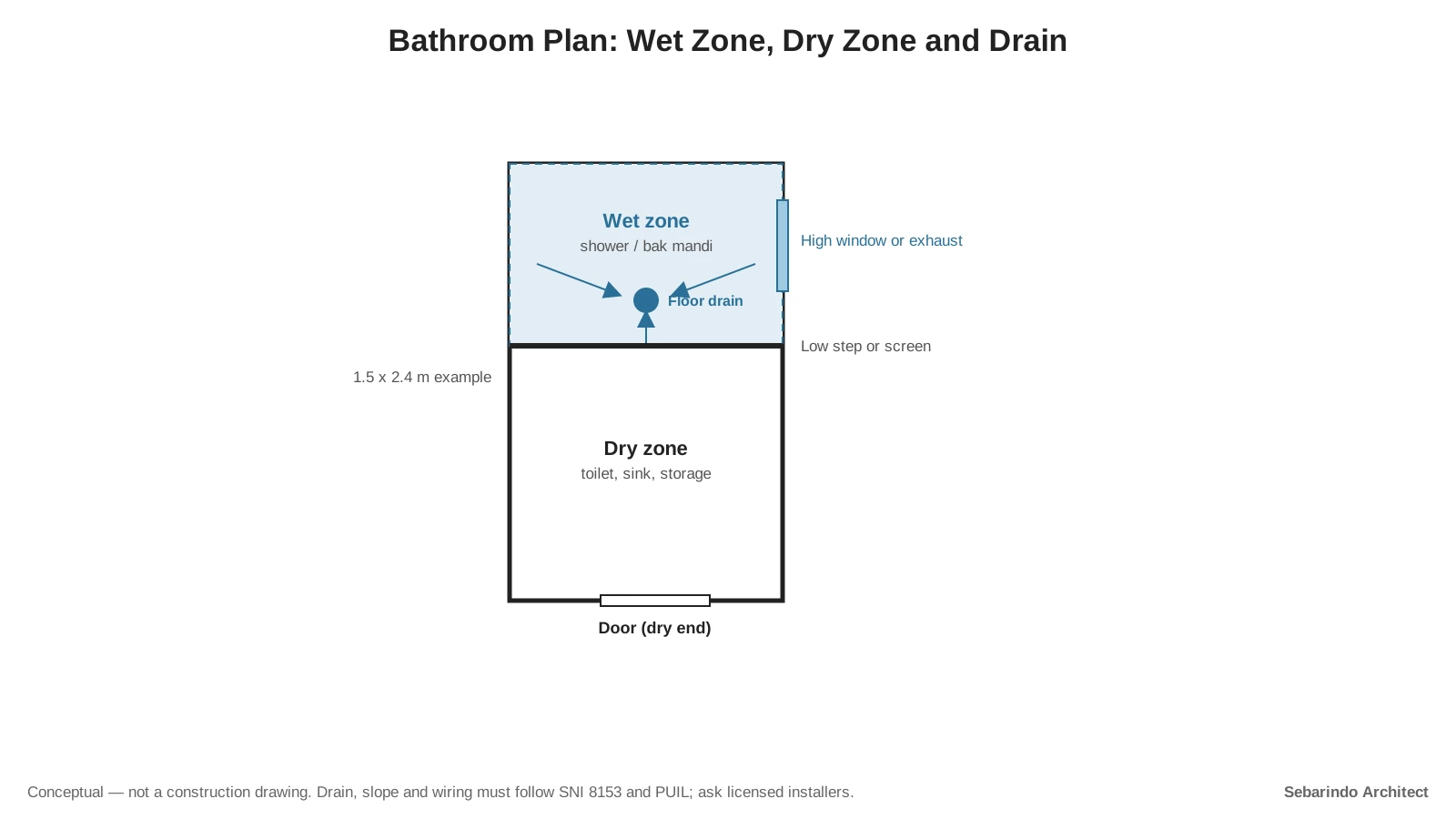
A wet zone is where water lands every day: the shower or bak mandi (water tub) and the area around it. A dry zone holds the sink, toilet and any storage.
Keep the wet zone at the far end of the room, away from the door. A low step, a glass screen or simply a change of floor level stops water from spreading across the whole floor.
Say you place the shower beside the door. Every shower will leave a wet path that people track into the rest of the house.
Slope the Floor to the Drain
The floor should fall gently toward a floor drain so water never stands. Plumbing in Indonesian buildings follows the national standard SNI 8153:2015 on building plumbing systems, which your plumber or designer should apply.
Ask for the drain to sit in the wet zone, and test the slope with a bucket of water before the tiles are grouted. Standing puddles after tiling are very hard to fix without breaking the floor.
Waterproof Before You Tile
Tiles and grout are not waterproof on their own. Water seeps through grout lines into the wall and the slab below.
A waterproof coating under the tiles, on the floor and up the walls of the wet zone, keeps water in the bathroom. In an upstairs bathroom, it also protects the ceiling of the room underneath.
Choose Surfaces That Dry Fast
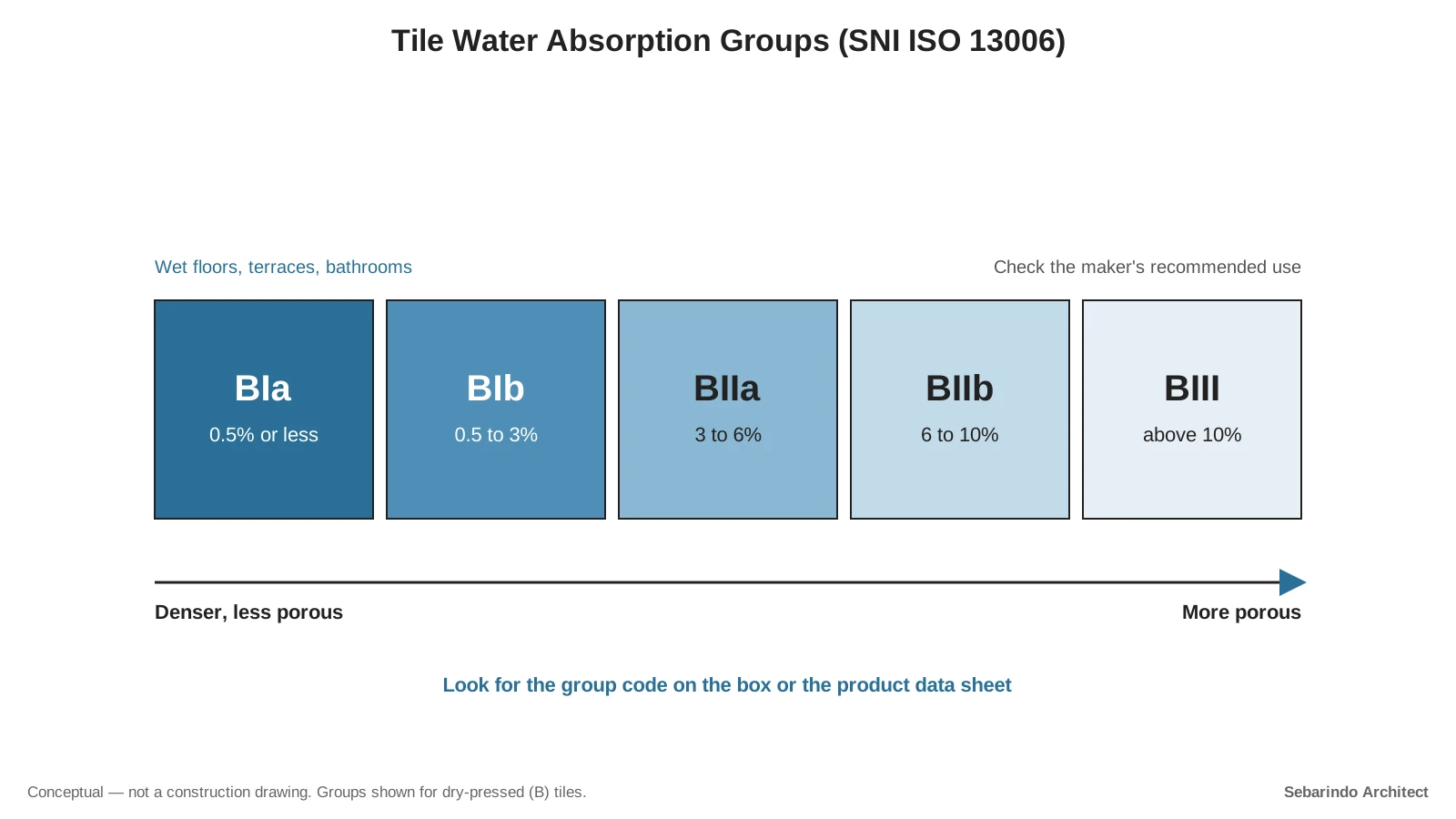
Every grout line holds a little water. Larger tiles on the walls mean fewer lines to clean and fewer places for mold to start.
Fill the joint between floor and wall, and around the tub or basin, with a flexible sealant rather than grout. Avoid untreated wood and fabric in the wet zone, and keep storage on the dry side.
Keep Electricity Away From Water
Electrical installations in Indonesian buildings must follow the PUIL standard, made mandatory by Ministry of Energy and Mineral Resources Regulation 36/2014. Its scope covers low-voltage installations in households.
Do not add sockets, heaters or lights near a shower yourself. Ask a licensed electrician to place them according to PUIL, and check whether your installation needs a fresh inspection.
Before the tiler arrives, check three things: the drain position, the floor slope and the waterproofing layer. Each one is invisible once the tiles are down.
This article is general information, not a structural, electrical or legal assessment of your building. Structural work, wiring and permit decisions should be checked by a licensed architect or engineer and your local building office.
Komentar Ditutup! Anda tidak dapat mengirimkan komentar pada artikel ini.